

Brand Image
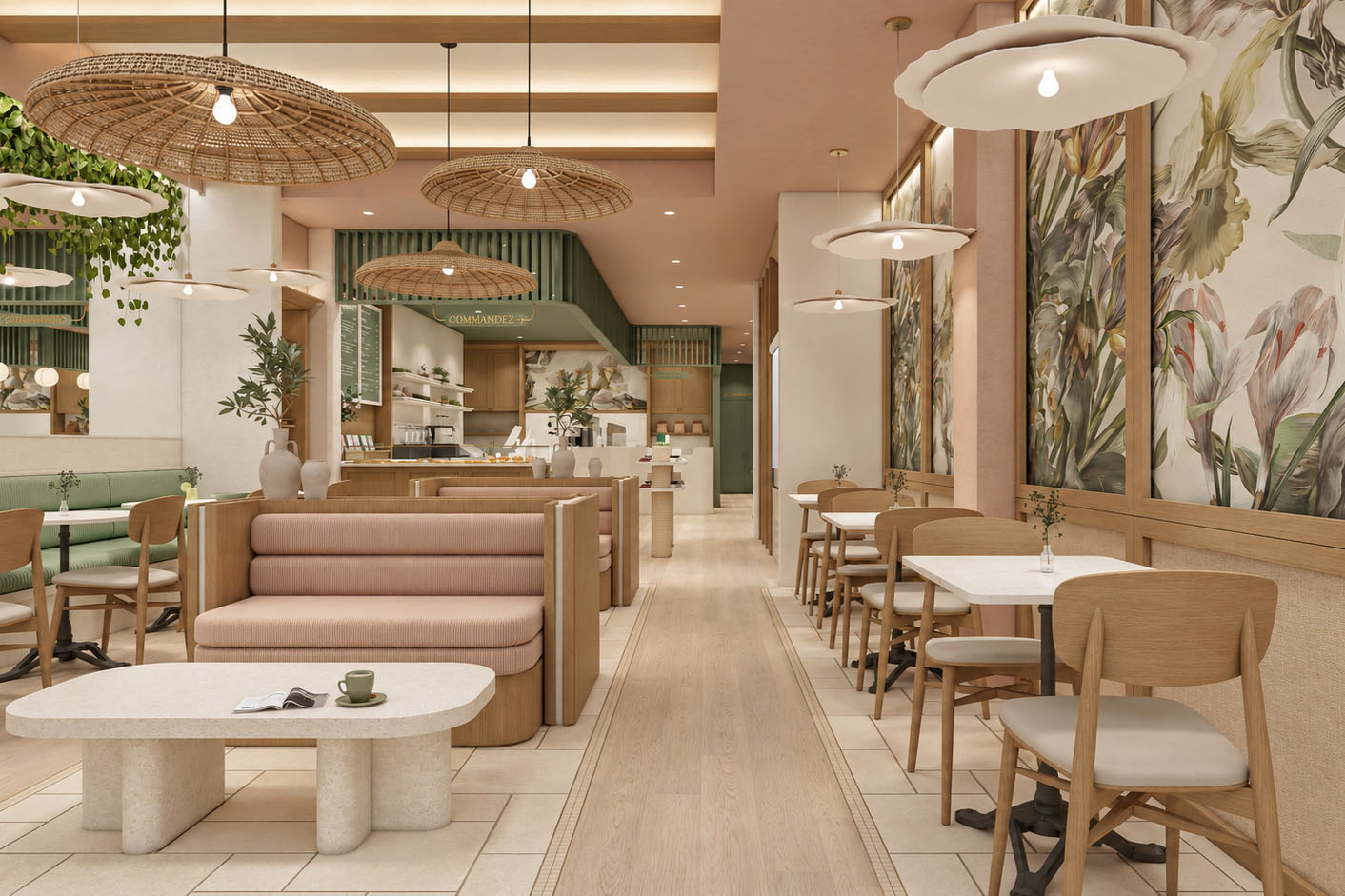
LILY was born out of a desire to offer a fresh perspective on healthy ready-to-eat meals. From the very first locations, we supported our clients’ vision by designing a spatial identity capable of reinforcing the brand’s positioning and growth. The store design contributes to the overall experience, the way the spaces are perceived, and the desire to return.
The palette of natural tones, accented with sage green and powdery pink, and the floral wallpaper are recognizable elements that carry over from one location to the next. These design elements are part of a comprehensive approach to space, furniture, and layout. At Peel, they ensure the continuity of LILY’s identity while allowing for an architectural expression unique to this new location.


Conceptual Intentions
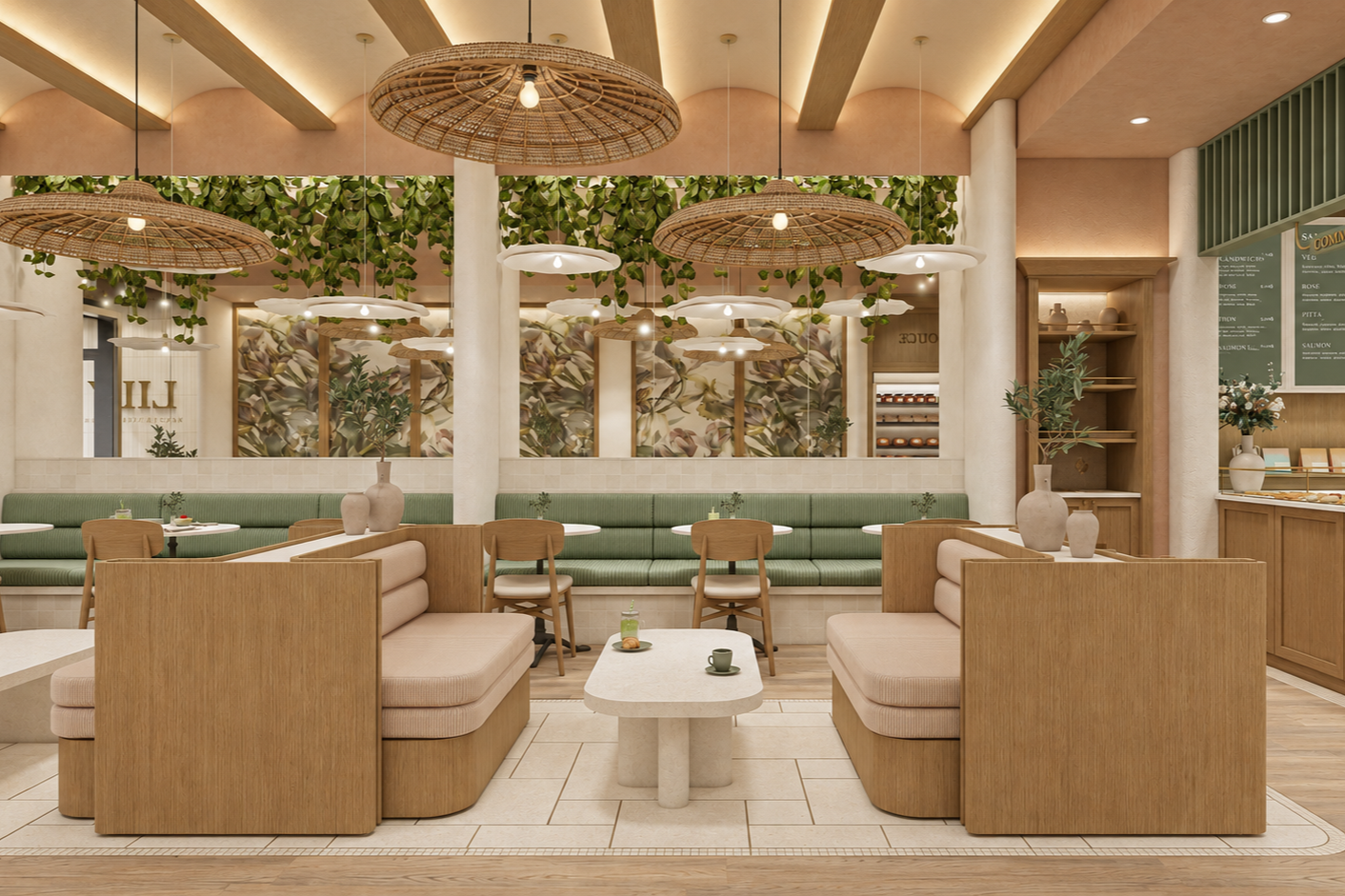
On Peel Street, the character of the surrounding businesses led us to delve deeper into the volumes and design details. The rhythm of the vaulted ceilings structures the space, while the design of the benches defines different seating areas. Indirect lighting highlights the architectural forms and helps define the space.
Light wood, mineral surfaces, and textiles come together to form a cohesive whole, the proportions and transitions of which we have carefully crafted. The curves of the furniture echo those of the ceiling, lending a sense of coherence to the design down to the finest details. This attention to design allows LILY Peel to make a strong statement in its retail environment while maintaining the brand’s familiar aesthetic.


A Flexible Franchise
LILY’s growth is based on a shared identity and the ability to adapt to each neighborhood. The expected customer base, the reasons for visiting, and the time spent at each location may vary from one branch to another. The concept therefore allows for the flexibility needed to address these realities, while preserving the hallmarks that are the brand’s strength.
Our approach is based on a deep understanding of future users and their habits. Our expertise in environmental psychology allows us to translate this understanding of the context into design decisions: the number and types of seats, the layout of pathways, and the space dedicated to takeout orders. Each choice helps define how the space will be used, whether for a quick visit or a longer stay.


